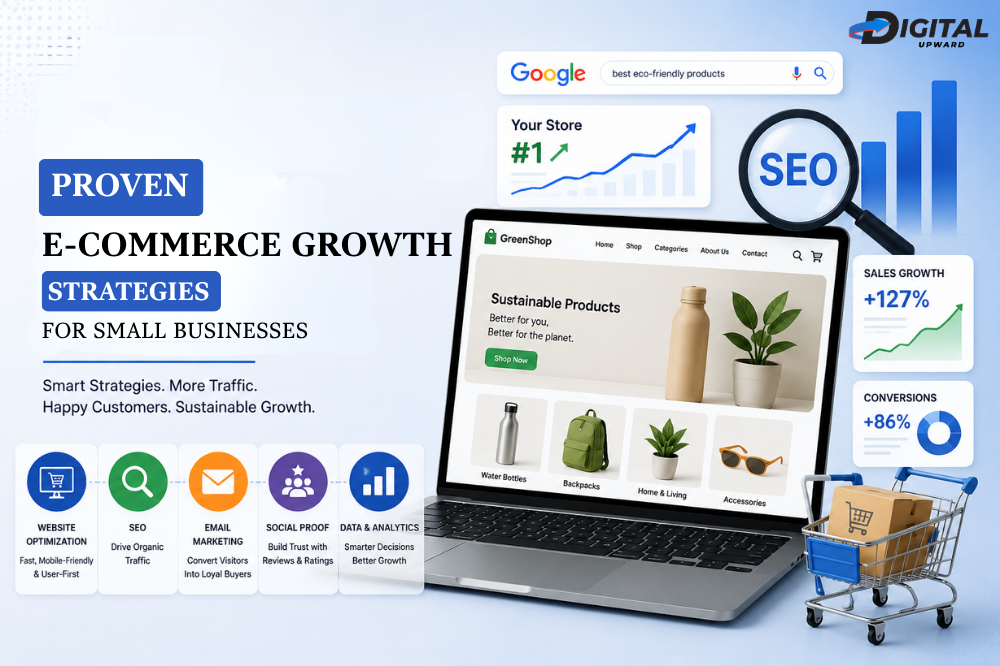
Launching a small e-commerce site and putting up a bunch of product listings is not enough today. The digital marketplace is packed, competitive, and constantly shifting. Therefore, to make your store shine, gain genuine buyers, and return purchases, you need a clear-cut plan that is built on the right growth.
These tactics provide you with a clear next step, realistic, vetted, and designed for real-world budget-able brands, whether you are getting started or stuck in a plateau.
1. Build a Website That Works as Hard as You Do
Your website is your store, it is your salesperson, and the foundation of your brand. If it takes time to load, presents an unpolished face, or is difficult to navigate. They leave. It’s that simple. The quality of an e-commerce website design is not only about a good appearance, but it is also about having an easy-to-use online store. A fast, reliable, and smooth shopping experience. Basics like easy navigation and mobile-friendly layouts to the checkout process, and quality product photography are where you cannot afford to cut corners. The visitor should understand in a split second why they should be buying what you are selling, why they are going to buy from you and not someone else, and how.
Whether you’re creating a new site from scratch or redesigning an existing one, partnering with a good e-commerce development company helps to ensure that your site has been built on reliable technical architecture, scalable and ready for the expected growth of your business, secure for customers, and optimised for speed across all devices.
2. Let SEO Bring Customers to You (For Free)
You can get traffic from paid ads, but once you stop paying, the traffic will disappear. On the other hand, it is not the case with search engine optimization (SEO). This makes visibility that is sustainable and will continue to be the result over a period of months on month.
One of the best and smartest decisions to invest in, especially for small businesses, is SEO services for e-commerce. We will explain: your store should appear on that front page when someone searches for “eco-water bottles for sale” or “buy leather wallets online.” But ranking there means high-intent traffic every single day
Key areas to focus on:
- Correct keyword usage in titles, descriptions, and image alt texts for product page optimisation
- Category page structuring make things easier for search engines (and shoppers) to find products
- Technical SEO, super fast load times, clean URL structure, proper schema markup, and NO broken backlinks
- Content and blogging answer questions your audience is already asking
Partnering with an experienced e-commerce seo agency is the most effective way to accelerate this process. They know the kind of activity that helps you get a pat on the back from Google, they monitor what your competitors are doing, and make sure you stay ahead.
3. Turn Buyers into Loyal Fans via Email Marketing
In a world full of social media posts and influencer marketing, email is still one of the least leveraged resources available to small e-commerce businesses. Social media algorithms change. Ad costs rise. But your email list? That is yours.
Send personalized emails based on what people were reviewing or buying. Welcome new subscribers with a discount. Reward milestones with personalized offers and rewards. These basic interactions help to create relationships and get customers to return time after time.
Segmenting your list–simply put, this is when you group people together based on their interests or purchase history. It makes all the difference between making your emails feel personal and not spammy, which gives rise to higher open rates and conversions!
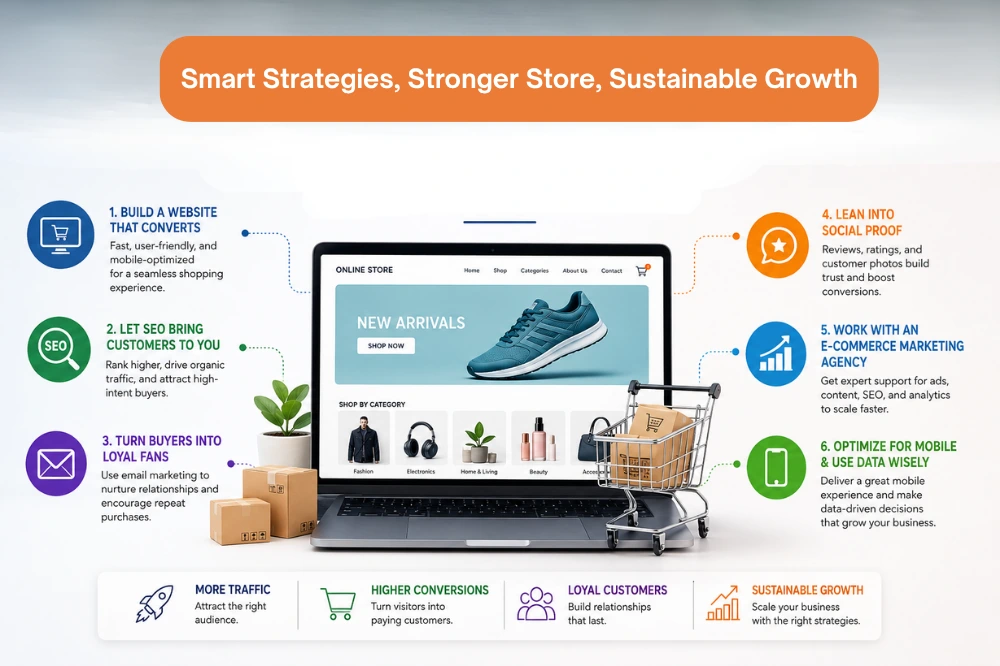
4. Lean Into Social Proof
People trust human beings over brands. Hence, the potency of reviews, ratings, and customer images. 200 positive reviews on a product convert much better than 0.
Customers need to be able to leave reviews easily. Post testimonials (real ones) on your website. Share user-generated content on your social accounts. The best marketing you will ever have is to let your happy customers do the talking.
5. Work With an E-Commerce Marketing Agency for Structured Growth
Wearing every hat in a small business is exhausting. At some point, seeking specialized assistance is not an extravagant expense, it can be a strategic approach. An e-commerce marketing agency uses to hire specialists who deal with the ads, or content, social media, and analytics so that you can focus on your product and customer. There is a place for it all.
These can help you determine what channels have the best return, what your competitors are doing, how to improve your conversion rate, and where you are losing potential buyers. You get decisions based on actual data, instead of guessing
6. Mobile shoppers are optimized for, and data is used wisely.
More than half of all online shopping happens on mobile devices. If your shop is not smartphone optimised, you are giving away a big chunk of possible sales every day. Mobile users want speedy load times, navigation that accommodates thumb use, and checkout and payment that is practically feels effortless.
Base your decision-making on data. You can analyse which products get views without purchases, the points where shoppers drop off when going through checkout and finally where your traffic is coming from that actually converts to buyers. Identify patterns with Google Analytics, heatmaps, and your platform dashboard, then act on those patterns by making your checkout easier or product description better or reallocating the ad budget based on what seems to work better.
Why Small Businesses Trust Digital Upward for an e-Commerce store
Every successful e-commerce store is powered by a team that balances between design and digital growth. Digital Upward is one of the best small business website designing and development agencies that help you start an online life from day zero. In short, they build sites that perform. Fast-loading, mobile-ready e-commerce websites engineered to convert visitors into buyers, not pretty pages collecting dust.
Digital Upward is more than a web design agency we offer the best SEO services to get your store on Google, providing you with proper audience segmentation and organic traffic without eating up all ad budget. Whether you are starting from scratch, re-designing your site, or want to build an SEO strategy, Digital Upward has the experience and executed approach that small businesses really need in a competitive digital space.
Final Thoughts
Building a thriving small e-commerce business is entirely possible but it takes a strong foundation, the right tools, and strategic alliances. This means that everything, from investing in a solid e-commerce website design and keeping up with ongoing SEO efforts to creating loyalty through email and reviews builds upon each other.
Start where you are, improve one area at a time, and do not hesitate to bring in an e-commerce development company when it is time to level up. The businesses that grow are the ones that keep showing up, keep learning, and never stop refining.
 What Is "Multimodal" in Google Search Console? A Simple Explanation
 Digital Marketing Agency for Education: Building a Better Student Acquisition Strategy
 ChatGPT Now Has Ads: Here's What That Means for Your Business
 Why Local Customers Need More Than a Google Ranking
 Why Website Architecture Matters More Than Visual Design