The Indian eCommerce market is experiencing unprecedented growth, driven by over 900 million Internet users and a surge in digital payment adoption. This presents a unique opportunity for businesses to establish a strong online presence, but it also comes with challenges such as intense competition and the need for technological adaptation. This can be achieved by working with the best eCommerce development company near you. The most suitable platform will develop as your business does; a bad one will obstruct growth, forcing you to rebuild everything later on at considerable expense and thus breaking the trust of both customers and team members alike. Rejecting the right platform could slow your business’s growth and damage the business process, leading to problems later.
This guide will be of great help, irrespective of the size of the organization, whether a small retailer in Delhi, a growing Mumbai-based brand, or an established business stretching out digitally.
Understanding the Core of eCommerce Platforms
An eCommerce platform is the software that runs your online store. It handles all the necessary tasks like product listings, payment processing, inventory management, order tracking, and customer data.
There are three main types:
Hosted platforms (SaaS): These are commercially available software services where the provider handles hosting, security, and updates. You have to pay a monthly fee to use it and focus on selling products. Examples include Shopify and BigCommerce.
Open source platforms: These give you total control and customization options, but require technical ability. You’re responsible for hosting, security and maintenance. WooCommerce and Magento come under this category.
Custom-Built Platforms: These solutions are developed according to your specific business requirements. Maximum flexibility can be achieved but it will also double the price, takes more time and involves labor-intensive work.
Key Features Needed by Every Indian eCommerce Business
Before exploring specific online selling platforms for retailers, it’s crucial to understand the key features that are essential for eCommerce success in the Indian market.
Multiple Payment Options
Indian customers can be quite diverse in their preferences. Your platform must support multiple payment options like UPI, net banking, credit/debit cards, Cash on delivery, etc. Use of digital wallets like Paytm and PhonePe is also becoming popular these days.
Mobile-First Design
Over 75% of online shopping is done via mobiles phones in India. Your platform needs to provide a seamless mobile experience with fast speed and easy navigation.
Regional Language Support
India has thousands of languages. The incorporation of Hindi, Marathi, Tamil , Bengali and other regional languages will increase your customer base to a great extent.
Compliance with GST
Built-in options for GST calculation, invoice generation and compliance features. This will help you a lot while tax filing and let you work in accordance with the law.
Inventory Management
By effective management of stocks across all channels with real-time inventory tracking, you can avoid overselling and operate effectively from multiple locations.
Logistics Integration
Working with delivery firms in India like Delhivery, Bluedart and DTDC can make things a lot easier for you. Real-time tracking keeps your customers informed while reducing support calls to customer service.
Best eCommerce Platforms in India
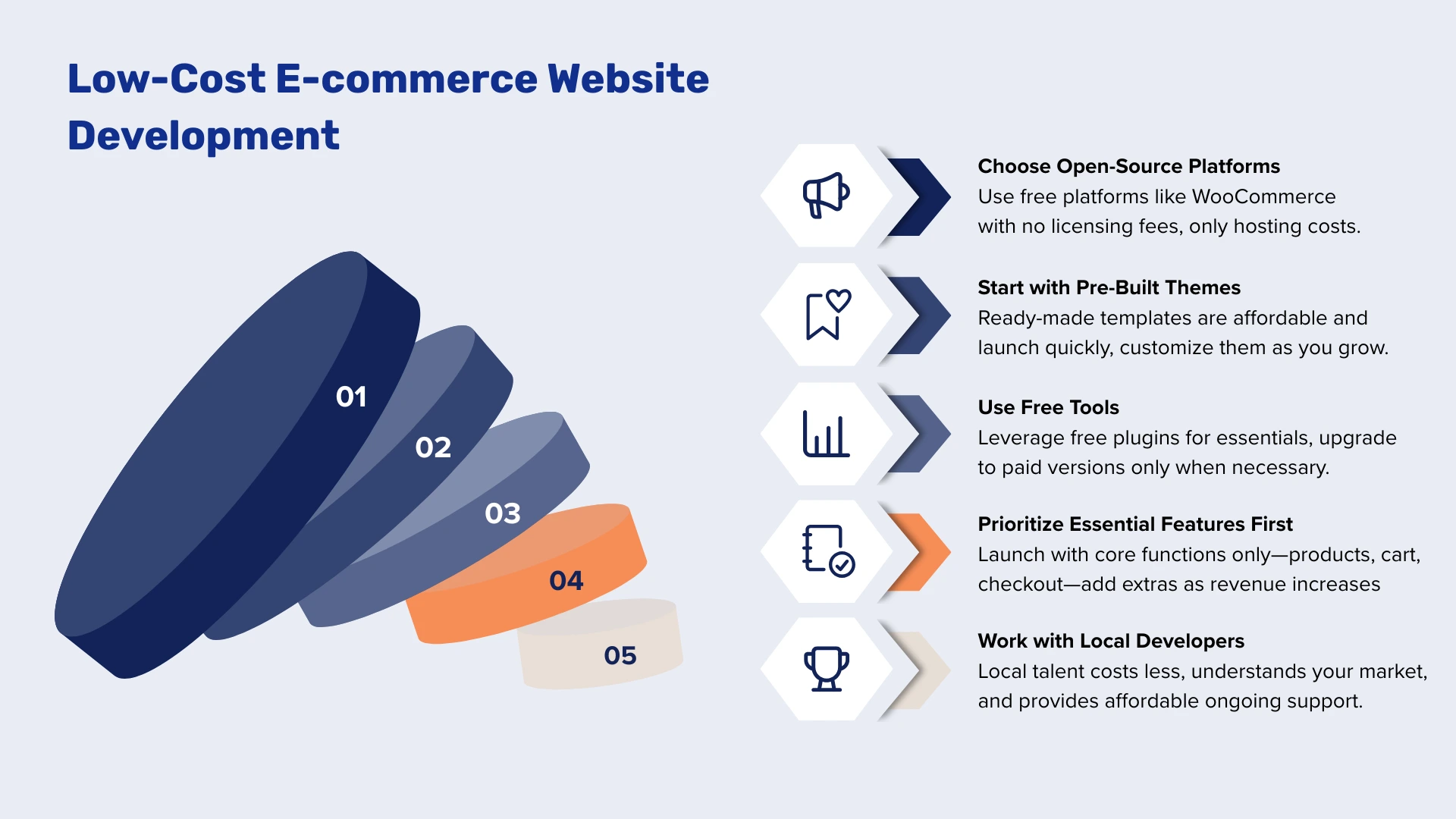
Shopify – The hosting is user-friendly, stable and fast to set up. Best for novices or small-to-medium-sized businesses. The downside is longer monthly fees and transaction costs will add up.
WooCommerce – Free and expandable WordPress plugin which provides absolute control and customization for companies having technical backbone. It was recommended by many website developer in Delhi. Requires hosting and maintenance.
Magento – Enterprise level software for large scale operations. Extremely scalable, however you need to be an expert in technical matters all the time.
BigCommerce – Combining simplicity and features tailored specifically for your business, with zero fees for every transaction! Perfect for any company that needs to expand.
Wix eCommerce – With limited scalability, small-scale investors who are just starting out will benefit from investing here.
The Indianization Factor: Adapting to Local Market Needs
International platforms are good, yet they are not designed for Indian markets specifically. This is what ‘Indianization’ will mean for your success in eCommerce:
Payment Options: Indian customers are more interested in other collective payment methods other than the ones used in Western markets. You must integrate local payment gateways, and offer COD as an option, no matter even though UPI is now on top.
Festival Sales: Sales traffic is very good during Diwali, Eid, Holi, and other festivals. Your platform needs to be able to handle the peak traffic without crashing. Load testing and scalable infrastructure are must for these situations.
Price Sensitivity: Indian consumers are extremely sensitive to the price of products. Featured additions like coupon codes, flash sales, and bulk pricing cannot be ignored.
Hyperlocal Delivery: In big metro cities, such as Mumbai or Delhi, it is now expected to receive deliveries on the same day. In order to make this happen, local logistics partners must be integrated, and multi-warehouse support for operations must be set up explicitly.
Customer Service Expectations: Indian clients expect customer service in their native language. The function of WhatsApp integration, support of chatbots with regional languages, and convenient return process will build your confidence.
Making the Right Choice: A Step-by-Step Approach
- Determine the sale volume you anticipate; do you require multi-vendor support; what level of technical support you can provide; availability of affordable e-commerce solutions and what type of products need to be integrated with your system.
- Look at free trial periods for uploading products, running through the checkout process, and accounting procedures. Mobile usability tests are something else that should not be missed either; also take note of the least desirable part when it comes to visualizing a backend interface.
- Check that your accounting software is compatible with the system, connect to your own payment gateways; existing CRM or ERP need to be seamlessly integrated.
- Look at the different sorts of aid that are available, in particular, see about any active community forums and check how efficient support team members respond when problems arise.
- Make sure it will be stable for at least another 3 years, can take more traffic, and offers an exit strategy.
Getting professional help and moving forward
Not everyone has the time or know-how required to run an eCommerce platform well. Working with experienced developers will get your store off the ground with everything in place, as technical complications are handled from the start. They customize existing features to fit your needs, create what’s missing, and integrate everything smoothly.
If you’re seeking an eCommerce platform in tune with the needs of your business, then Digital Upward can help. Digital Upward specializes in guiding Indian enterprises in the selection and implementation of eCommerce platforms. From selecting the right solution to creating high-converting stores optimized for the Indian market, we make your eCommerce dream a reality.
 Submitted URL Marked ‘Noindex’: Why It Happens & How to Fix Them
 Soft 404 Errors: Causes, Fixes, and Prevention
 Discovered – Currently Not Indexed: Understanding and Resolving
 Crawled – Currently Not Indexed: What It Means & How to Resolve It
 Page Not Indexed: Common Causes and Solutions